• Skip to main content
  • Skip to footer
Oicmf Logo 2020

Orcas Island Chamber Music Festival

Classical Music with a View

Donate | Contact | E-Newsletter

  • Home
  • Events
    • 2026 Summer Festival
    • 2026 Season Brochure
    • “Friends of Joyce” Tickets for Young People and Families
    • Newsletters
      • Scherzo Newsletters
    • OICMF Archives
      • Festival Programs
      • Festival Artists
      • Archive Videos
  • Support
    • Donate to OICMF
    • Ways to Support OICMF
    • Sponsorships
    • Planned Giving
    • Volunteer
    • Festival Store
  • About Us
    • Once Upon a Time
    • Our Mission
    • Artistic Leadership
    • Board of Directors
    • Staff
    • Alumni Artists List
    • Marilyn Anderson Young Musician’s Award
    • The OICMF Guide to Orcas Island
    • Videos
      • OICMF YouTube Channel
      • 2020 Livestream Festival Trailer
  • Contact
    • Contact OICMF
    • Directions
    • Lodging and Ferry Travel

Furioso!

Friday, August 15 at 7:30pm • Saturday, August 16 at 5:30pm

This program is dedicated to our Executive Director, Anita Orne, for all her years of expertise and love of music!
Oicmf Aug15 16 Furioso

Bohuslav Martinu (1890–1959)

  • Variations on a Theme of Rossini (1942)
    • Valentin Radutiu cello
    • Jon Kimura Parker piano
Read Program Note

Bohuslav Martinu (1890–1959)
Variations on a Theme of Rossini for cello and piano (1942)

Program note by Lisa Bergman

Considered one of the greatest Czech composers, Martinu himself had an explanation for what we are hearing today: “The artist is always searching for the meaning of life, his own and that of mankind, searching for truth. A system of uncertainty has entered our daily life. The pressures of mechanization and uniformity to which it is subject call for protest and the artist has only one means of expressing this, by music.”

With Martinu’s statement in mind, what do GiacomoRossini, Pablo Picasso, and Gregor Piatigorsky have in common? In the case of this work, it’s Cubism – the fragmentation and abstraction of subjects. Martinu is the mad scientist in his laboratory composing his Variations on a Theme of Rossini FOR Piatigorsky. The theme is – fair and square (no pun intended) – by Rossini (from his opera La Cenerentola), but it doesn’t stay that way. Much as Picasso challenged traditional values of space, form, and perspective to create multi-faceted, two dimensional figures on his canvases, Martinu lets us heara cubist’s take on a lovely tune, and the deconstruction of it before our very ears! Fasten your seatbelts for a rocky ride.

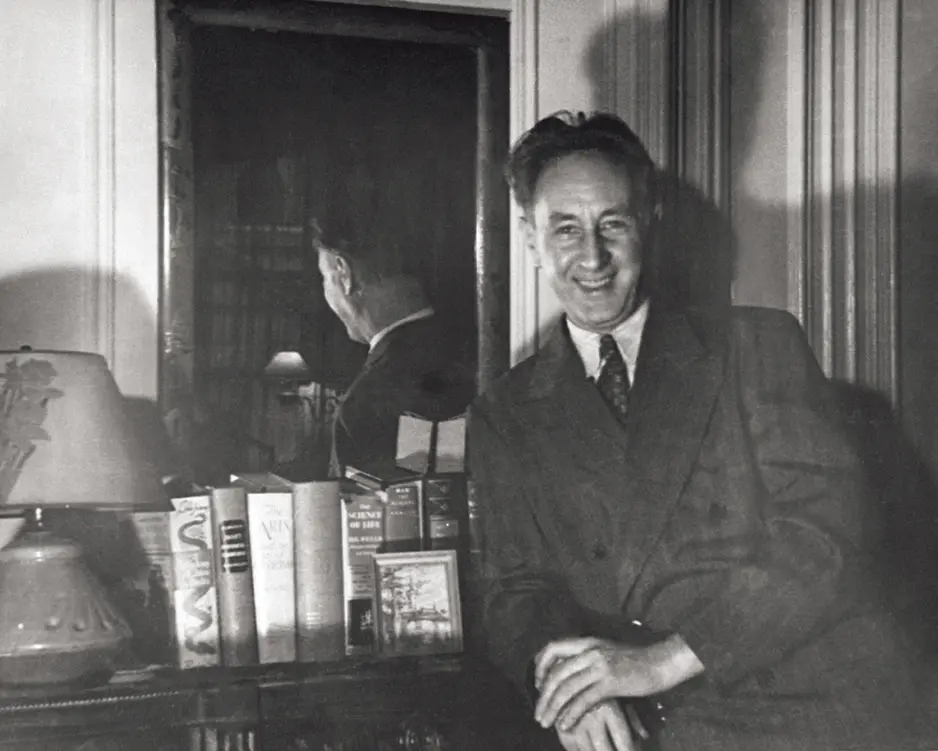
Bohuslav Martinu

Bohuslav Martinu in his New York apartment, 1942–43.
(Photo: Bohuslav Martinu Centre in Policka, Czech Republic.
Courtesy of The Dvorák American Heritage Association)


Joseph Haydn (1732–1809)

  • Piano Trio in E Major, Hob. XV:28
    • Allegro moderato
    • Allegretto
    • Finale. Allegretto
      • Chee-Yun violin
      • Valentin Radutiu cello
      • Jon Kimura Parker piano
Read Program Note

Joseph Haydn (1732–1809)
Piano Trio in E Major, Hob. XV:28 (1797)

Program note by Lisa Bergman

Henry Ford forced a personal style limitation on his customers by being famously emphatic about the color range of his Model T: black – and ONLY black! Joseph Haydn grappled with a formidable creative limitation set on him by the quality of local instruments: the ONLY keyboards in Austria in his day were weak and bashful. Resigned to finding a solution when composing chamber music with keyboard, Haydn cleverly compensated by doubling the bass line of the keyboard parts with low strings. Any port in a storm, right? UNTIL something unexpected and empowering happened: Haydn discovered the new and powerful Broadwood pianos available throughout England! Quickly and confidently, he composed three new piano trios, including this one, worthy of virtuoso keyboardists everywhere. No tinkering needed.

The E Major Piano Trio is surprising in many ways. The pizzicato in the strings WITH staccato piano bass notes gives the illusion of a harp, while a gorgeous legato melody is played by the pianist’s right hand. Then, with daring and unusual harmonic shifts, Haydn surprises the players with key changes that are alarming until their “Aha” moments reveal a clever practical joke. The finale both meanders and scampers in quirky ways. How to explain this creative behavior? Remember, he was relegated to the rural location of his place of employment, the Esterhazy Palace, 50 miles from Vienna and a 12 hour trip by horse-drawn coach! Haydn’s explanation is simple and revealing: “There was no one near to confuse me, so I was forced to become original.”

“I listened more than I studied…
therefore little by little my knowledge
and ability were developed.”
– Joseph Haydn


Alberto Ginastera (1916–1983)

  • String Quartet No. 2, Op. 26 (1958)
    • Allegro rustico
    • Adagio angoscioso
    • Presto magico
    • Libero e rapsodico
    • Furioso
      • Miró Quartet
        • Daniel Ching violin
        • William Fedkenheuer violin
        • John Largess viola
        • Joshua Gindele cello
Read Program Note

Alberto Ginastera (1916–1983)
String Quartet No. 2, Op. 26 (1958, rev. 1968)

Program note by Lisa Bergman

Nothing inspires like a deadline, right? Not for Ginastera! “Creation is always for me a painful and slow process,” he said. “I cannot write quickly, as other composers do, and I am never satisfied with my first ideas. I am always struggling with my own self and trying to attain perfection. That is why I dislike promising fixed dates, because in many cases it would be almost impossible to keep my word.”

So, thank goodness for Harold Spivacke, Chief of the Music Division at the Library of Congress, who was Ginastera’s project manager in the Elizabeth Sprague Coolidge Foundation’s annual festival that commissioned String Quartet No. 2. Spivacke reassured Ginastera greatly by saying, “We know that the creative activity of a composer is something that cannot be geared to a clock…I shall continue to hope that the work will be ready on time, but if it is not, I shall not hold it against you.”

Was the deadline met? Not by a long shot. Two years later, in 1958, Ginastera’s “neo-expressionism” string quartet was presented to the world. Each movement is individually described by the Argentinian-born Ginastera with key words – rustic, anguished, magic, rhapsodic, and furious. The virtuosic special effects are Hitchcockian: gasps, scampering mice, bouncing balls, sirens, ghosts, and shots. His surprise is a “bonus” rhapsodic movement built from a series of cadenzas on each of the instruments before diving into the wild dance of the finale.


~ INTERMISSION ~


Dmitri Shostakovich (1906–1975)

  • Prelude for two cellos and piano, Op. 97
    • Valentin Radutiu cello
    • Ani Aznavoorian cello
    • Jon Kimura Parker piano
Read Program Note

Dmitri Shostakovich (1906–1975)
Prelude for two cellos and piano, Op. 97 (1955)

Program note by Lisa Bergman

Shostakovich was at times censored and revered. Under Stalin’s dictatorship, he would be praised for his brilliance, and then without warning, attacked by authorities for his works, and performances of them would be banned. His ten-year-old son was even forced to publicly denounce him. He saw colleagues and friends sent off to labor camps in the Soviet Union, which was just the beginning of Stalin’s Reign of Terror, during which nearly two million people died. Life in Russia during Shostakovich’s lifetime was like playing a game in which the rules were never clear, but the price for breaking them was death.

It’s no small wonder that so much of his music is dark, crunchy, painful, and intense. But a ray of sunshine peaks through with Five Pieces for Two Violins and Piano, harkening back to his years as a young student playing the piano in a silent movie theater. He was active in the Soviet Union’s huge film industry and composed scores for 36 motion pictures. To supplement his income, he asked his friend Lev Atovmian to arrange suites of his film and ballet music for intimate performances in homes and schools. Each of the Five Pieces in the suite tells a short story. The Prelude (arranged here for two cellos and piano) sets the sentimental stage.


Gabriel Fauré (1845–1924)

  • Piano Quartet No. 1 in C minor, Op. 15
    • Allegro molto moderato
    • Scherzo. Allegro vivo
    • Adagio
    • Allegro molto
      • Zachary DePue violin
      • Aloysia Friedmann viola
      • Ani Aznavoorian cello
      • Jon Kimura Parker piano
Read Program Note

Gabriel Fauré (1845–1924)
Piano Quartet No. 1 in C minor, Op. 15 (1876–1883)

Program note by Lisa Bergman

Gabriel Fauré was no stranger to keeping his nose to the grindstone. He could have written a book on effective habits of successful people. Likely a workaholic, he had a stunning career as a church organist, choirmaster, director of the Paris Conservatory, private music teacher, and composer (during summer breaks and whenever he had time). His music was widely known and performed to great acclaim. But all work and no play has its effects. He was in emotional turmoil as he began composing his Piano Quartet in C minor, his four-month engagement to Marianne Viardot (the daughter of the famous French mezzo-soprano Pauline Viardot) having recently ended.

The first movement has the feel of an involved conversation between the instruments, not reaching a conclusion until the very last lines. The Scherzo is playful and bubbly. But it’s the Adagio that carries a sense of loss, perhaps grieving the ill-fated engagement. After the première of the work, Fauré jettisoned the original Finale, and seven years later (1876) composed the Finale we hear today, vibrant and dazzling, daring to include some twentieth-century spikes. The surprises continue as the work barrels toward the finish but shockingly hits a concrete wall, seeing stars as it recovers, floating briefly and then careening toward a jubilant finale!


Series Sponsors: David and Amy Fulton

Tonight’s Sponsors

Friday, August 15
Concert: Ginny Hawker and Theron Soderlund
Reception: Toni and Don Rupchock

Saturday, August 16
Concert: The Valerie Anders Concert, sponsored by The Anders Foundation
Reception: Carolyn and Bob* Volk
*Deceased

Footer

Facebook  Instagram Logo Youtube

Mailing Address:
Orcas Island Chamber Music Festival
PO Box 646
Eastsound, WA 98245

Telephone:
(360) 376-6636

Join Our Email List


Orcas Island Chamber Music Festival is an exempt organization as described in Section 501(c)(3) of the Internal Revenue Code,
Tax ID 91-1886480

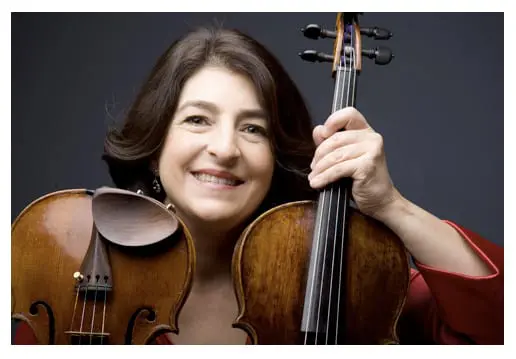
Aloysia Friedmann, Founder and Artistic Director

Alyosia

Ms. Friedmann is a violinist and violist, whose broad-ranging career has included tours in Japan, Europe, South America and the U.S., performances with New York’s most prestigious musical ensembles, and a special onstage role on Broadway. Trained at The Juilliard School and the University of Washington, Friedmann plays on a Grancino violin and a Grancino viola.

© 2026 · OICMF.org · site by highwaters

We use cookies on our website to give you the most relevant experience by remembering your preferences and repeat visits. By clicking “Accept All”, you consent to the use of ALL the cookies. However, you may visit "Cookie Settings" to provide a controlled consent.
Cookie SettingsAccept
Manage consent

Privacy Overview

This website uses cookies to improve your experience while you navigate through the website. Out of these, the cookies that are categorized as necessary are stored on your browser as they are essential for the working of basic functionalities of the website. We also use third-party cookies that help us analyze and understand how you use this website. These cookies will be stored in your browser only with your consent. You also have the option to opt-out of these cookies. But opting out of some of these cookies may affect your browsing experience.
Necessary
Always Enabled
Necessary cookies are absolutely essential for the website to function properly. These cookies ensure basic functionalities and security features of the website, anonymously.
CookieDurationDescription
cookielawinfo-checkbox-advertisement1 yearSet by the GDPR Cookie Consent plugin, this cookie is used to record the user consent for the cookies in the "Advertisement" category .
cookielawinfo-checkbox-analytics11 monthsThis cookie is set by GDPR Cookie Consent plugin. The cookie is used to store the user consent for the cookies in the category "Analytics".
cookielawinfo-checkbox-functional11 monthsThe cookie is set by GDPR cookie consent to record the user consent for the cookies in the category "Functional".
cookielawinfo-checkbox-necessary11 monthsThis cookie is set by GDPR Cookie Consent plugin. The cookies is used to store the user consent for the cookies in the category "Necessary".
cookielawinfo-checkbox-others11 monthsThis cookie is set by GDPR Cookie Consent plugin. The cookie is used to store the user consent for the cookies in the category "Other.
cookielawinfo-checkbox-performance11 monthsThis cookie is set by GDPR Cookie Consent plugin. The cookie is used to store the user consent for the cookies in the category "Performance".
CookieLawInfoConsent1 yearRecords the default button state of the corresponding category & the status of CCPA. It works only in coordination with the primary cookie.
viewed_cookie_policy11 monthsThe cookie is set by the GDPR Cookie Consent plugin and is used to store whether or not user has consented to the use of cookies. It does not store any personal data.
Functional
Functional cookies help to perform certain functionalities like sharing the content of the website on social media platforms, collect feedbacks, and other third-party features.
Performance
Performance cookies are used to understand and analyze the key performance indexes of the website which helps in delivering a better user experience for the visitors.
Analytics
Analytical cookies are used to understand how visitors interact with the website. These cookies help provide information on metrics the number of visitors, bounce rate, traffic source, etc.
CookieDurationDescription
CONSENT2 yearsYouTube sets this cookie via embedded youtube-videos and registers anonymous statistical data.
_ga2 yearsThe _ga cookie, installed by Google Analytics, calculates visitor, session and campaign data and also keeps track of site usage for the site's analytics report. The cookie stores information anonymously and assigns a randomly generated number to recognize unique visitors.
_gat_gtag_UA_45090600_191 minuteSet by Google to distinguish users.
_ga_3097280732 yearsThis cookie is installed by Google Analytics.
_ga_NTY52T320P2 yearsThis cookie is installed by Google Analytics.
_gid1 dayInstalled by Google Analytics, _gid cookie stores information on how visitors use a website, while also creating an analytics report of the website's performance. Some of the data that are collected include the number of visitors, their source, and the pages they visit anonymously.
Advertisement
Advertisement cookies are used to provide visitors with relevant ads and marketing campaigns. These cookies track visitors across websites and collect information to provide customized ads.
CookieDurationDescription
VISITOR_INFO1_LIVE5 months 27 daysA cookie set by YouTube to measure bandwidth that determines whether the user gets the new or old player interface.
YSCsessionYSC cookie is set by Youtube and is used to track the views of embedded videos on Youtube pages.
yt-remote-connected-devicesneverYouTube sets this cookie to store the video preferences of the user using embedded YouTube video.
yt-remote-device-idneverYouTube sets this cookie to store the video preferences of the user using embedded YouTube video.
yt.innertube::nextIdneverThis cookie, set by YouTube, registers a unique ID to store data on what videos from YouTube the user has seen.
yt.innertube::requestsneverThis cookie, set by YouTube, registers a unique ID to store data on what videos from YouTube the user has seen.
Others
Other uncategorized cookies are those that are being analyzed and have not been classified into a category as yet.
CookieDurationDescription
BIGipServerP2_MyemailsessionNo description
SAVE & ACCEPT
Powered by CookieYes Logo